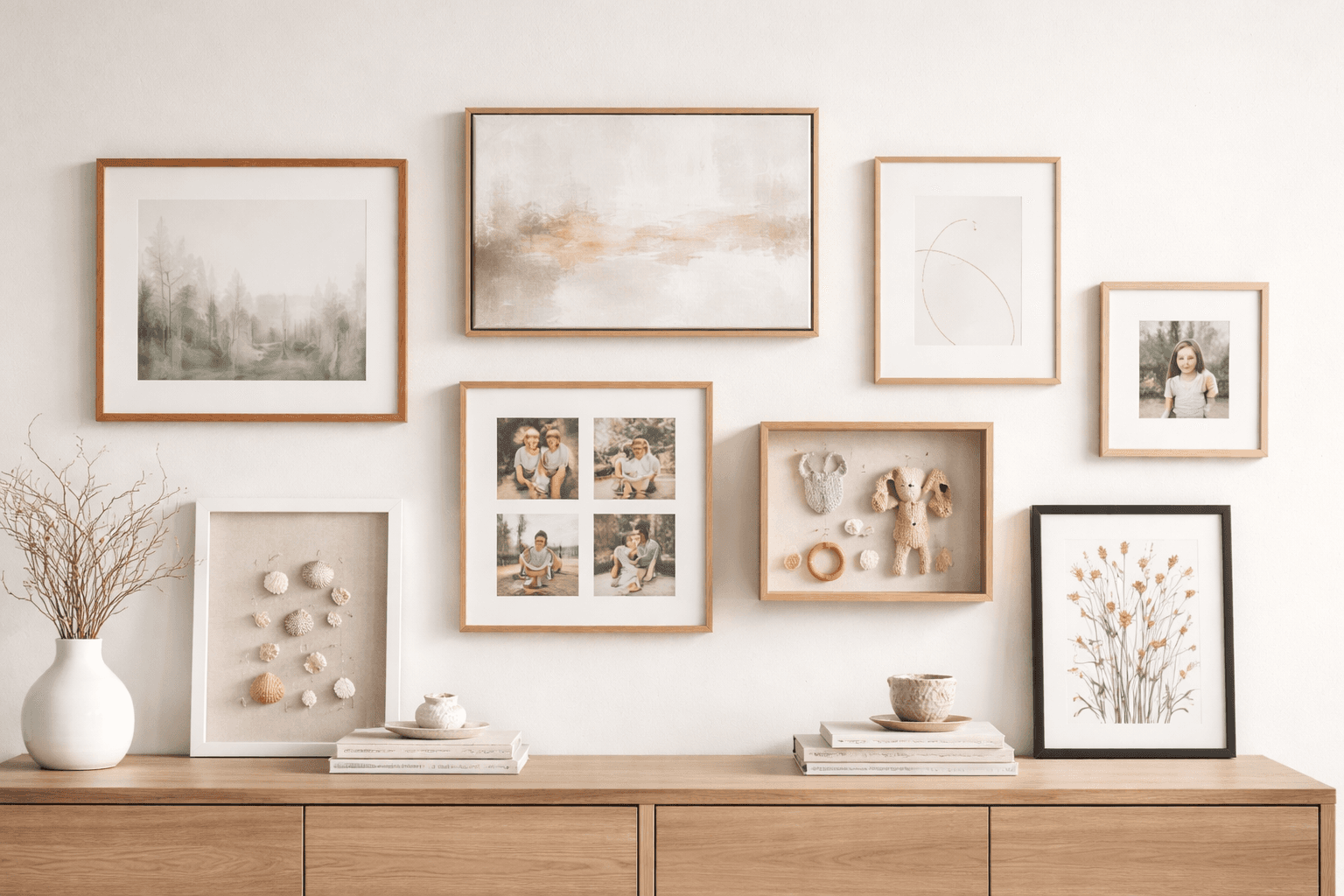
Choosing the Right Frame for Your Artwork
Choosing the right frame enhances how artwork is seen and experienced. From style and proportion to the space it lives in, thoughtful framing brings balance, clarity, and longevity to every piece.

dibofun world
January 12, 2026
Choosing the Right Frame for Your Artwork
A frame does more than hold artwork in place. It defines how a piece is presented, how it interacts with a space, and how it is experienced over time. Choosing the right frame is a considered process that brings structure, balance, and longevity to any artwork.
Whether framing a photograph, a print, a canvas, or a personal piece, the frame should enhance the artwork without drawing attention away from it.
Begin With the Artwork
The artwork itself should guide the framing choice. Its size, color palette, texture, and subject matter all play a role in determining the most suitable frame. Detailed or expressive pieces often benefit from simpler frames, while minimal artwork may be elevated through subtle depth or contrast.
The objective is clarity. The frame should support the artwork and allow it to be viewed as intended.
Understand the Space
Framing should always consider where the artwork will be displayed. Different environments call for different approaches. A living space, office, or learning environment each has its own character, lighting, and proportions.
Wall color, natural light, and surrounding elements influence how both the artwork and frame are perceived. A well-chosen frame feels integrated into the space rather than added later.
Select the Appropriate Frame Style
Each frame style serves a distinct purpose:
Wooden frames introduce warmth and a natural finish, suited to calm and timeless interiors.
Minimalist frames offer clean lines that allow the artwork to remain the focal point.
Floating frames create visual space around artwork, giving it a light and refined presence.
Floating canvas frames are designed specifically for canvas pieces, preserving clean edges and depth.
Collage frames present multiple artworks together, supporting narrative and visual continuity.
Shadow box frames provide depth and dimension for layered or three-dimensional pieces.
Photo frames are designed to present photographs clearly and without distraction.
Poster frames allow flexibility for artwork that may change over time.
Selecting the right style ensures the artwork is presented with intention and purpose.
Consider Size and Proportion
Proportion is essential in framing. A frame that is too small can restrict the artwork, while one that is too large can overwhelm it. Proper spacing and margins help create balance and allow the artwork to breathe, particularly when displaying multiple pieces or creating a gallery wall.
Choose Timeless Finishes
Trends come and go, but quality framing endures. Neutral tones, simple profiles, and durable materials offer longevity and adaptability. Timeless frames allow artwork to transition between spaces without losing relevance.
A Considered Approach
The most effective frames are often the least noticeable. They provide structure and protection while allowing the artwork to remain central. When chosen thoughtfully, a frame enhances both the artwork and the space it occupies.
Choosing the right frame is not about complexity or excess. It is about making informed, intentional decisions that allow artwork to feel complete, balanced, and at home.
Share this article

About dibofun world
Content creator and writer sharing insights and stories.
📬 Stay Updated
Get the latest articles and insights delivered straight to your inbox.
No spam, unsubscribe anytime. We respect your privacy.